Painting Kitchen Cabinets: A Practical Guide
Painting kitchen cabinets is mostly preparation, and the order of work matters more than the color. This guide covers measuring, removing and rehanging doors, primer and topcoat choice, white finishes, cost planning, and the point at which new custom cabinetry becomes the calmer decision.
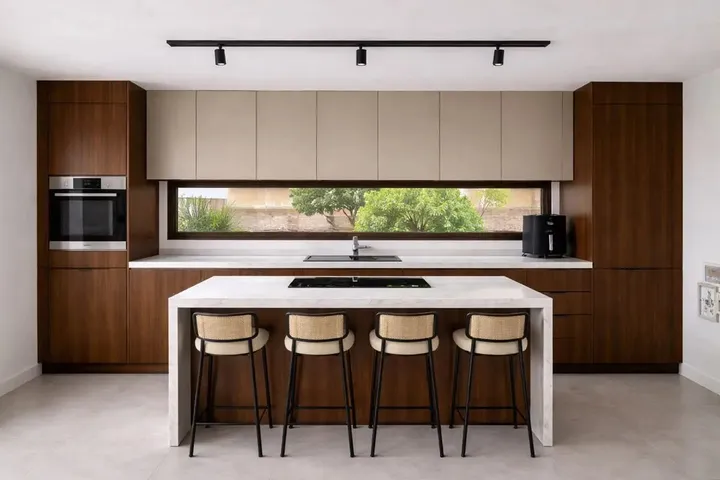
How to Paint Kitchen Cabinets Properly
Painting kitchen cabinets properly is a sequence of preparation steps rather than a single coat. Clear the kitchen, then remove and label doors, drawers and hardware. Clean and degrease every surface, repair minor defects, and sand for adhesion. Choose primer and paint by material and by how hard the surface is used. Apply thin coats, allow the finish to cure fully, and rehang only when the paint has hardened.
Not every run is worth painting. Where carcasses are out of square, shelves are failing or the layout wastes space, replacement is the calmer plan. Compare options in the kitchen cabinets range before deciding.
Painting kitchen cupboards and painting kitchen cabinets describe the same job. Cupboard and cabinet are both words for built-in storage, so cleaning, priming, painting and rehanging follow a single process. What changes is the product list: door style, material and finish decide which primer and topcoat suit, and how the doors must be handled.
Measuring Before Painting or Replacing
Begin with the cabinet boxes: width, height and depth for every run, wall to wall and floor to underside. Record door and drawer face sizes, then every opening, including the gaps left for appliances. Note how each run meets walls, ceiling and windows, and the filler or scribe space at returns and corners. Those measurements let cabinets, appliances, services and clearances be coordinated, so painted doors or new boxes fit without rework.
Send the layout drawing, wall measurements, style and material choices together, and George confirms project sizes in its quotation before production starts. Trade buyers should mark outlets, water, waste and ventilation on the same plan, because a moved service changes the opening size and the filler needed. Where several rooms are being reworked at once, the kitchen renovation planning notes cover how the sequence usually runs.
Removing, Reinstalling and Installing Cabinets
Label every door and drawer on the back with its position before it leaves the frame, and bag hinges, handles and shelf pins by room. Store painted doors flat, face up, on spacers. When painting kitchen cabinets, all hardware and doors come off and the boxes are prepped and cleaned, so the masking and protection work is the same either way. Rehang squarely, then adjust hinges and catches until the gaps are even.
For new cabinets, plan the layout against the drawing, set level lines, and mark shim points before any box goes in. Appliance openings and services are checked at that stage.
Height, Alignment and Appliance Fit
Cabinet height is a relationship rather than a fixed figure: base cabinets, countertop, upper cabinets, appliances, ceiling line and comfortable reach all set each other. Painting does not change carcass height, so a repaint leaves the geometry as it is.
Fit comes down to alignment. Doors should sit flush at the frames, adjacent fronts should share even gaps, and appliance openings should clear the units that slide into them, drawing in handles and ventilation space. Check the relationship between uppers and the ceiling before ordering, since a small change there affects filler strips, crown details and the visual weight of the run.
Color, Finish and Design Ideas
Useful painting ideas start with tone. A light palette opens a small kitchen, a darker base with lighter uppers adds depth, and painted frames against wood-tone doors give contrast without a full change of cabinetry. Sheen matters as much as color: a lower sheen hides imperfection on frames, while doors take a slightly higher sheen for cleaning. Hardware and door style carry much of the character.
Lighting changes everything. North light cools a warm white, and under-cabinet lamps shift color on the doors nearest them. Adjacent finishes, worktops and flooring set the temperature a palette must sit against.
Cost Factors and Quotation Planning
Painting cost is driven by paint and primer materials, door style, finish, cabinet size and quantity, hardware, preparation labor and shipping. Preparation usually takes longer than coating, because degreasing, repairs and sanding decide how the finish holds. Doors with a worn surface may need staining or painting anyway, since a failing finish can leave uncleanable surfaces. A cabinet maker may also be responsible for fabrication and painting in a cabinet project.
Send drawings through the inquiry form to request a quotation.
Painting Kitchen Cabinets White
White shows every handling mark, so preparation carries more weight. Degrease fully, then use a stain-blocking primer where knots, tannin or an old color could bleed through. Build the topcoat in thin passes rather than a heavy coat, and keep the work area dust-free between passes. A satin or semi-gloss sheen on doors wipes clean more easily than a flat finish, though it also shows surface defects.
Consider what sits next to the white: wall color, worktop, splashback and hardware all pull the tone warmer or cooler, and daylight changes it through the day. Plan touch-up paint for edges and handle zones before the doors go back.
A Beginner-Friendly Sequence
Beginners can paint kitchen cabinets with a fixed order of work: empty and protect the kitchen, label and remove doors and drawers, clean and scuff the surfaces, prime, apply thin coats, let them cure, then rehang and adjust. Working in the same order through every box keeps drying times predictable and stops hardware going back onto soft paint.
Slow down on preparation, coating thickness, dust control and drying. Removing paint with a heat gun, scraping or abrasive sanding disturbs painted surfaces, so isolate the work area and keep dust out of the rest of the home.
Paint Choice, Outdated Colors and Unfinished Cabinets
Paint choice for kitchen cabinets usually means a primer matched to the substrate plus a hard-wearing topcoat. Water-based acrylic and alkyd blends dry fast and stay flexible on doors; solvent-borne alkyds level well and cure hard. Water-based products suit MDF and plywood, while solid wood takes either, provided the grain is sealed first. Sheen is chosen for cleaning and for how much surface imperfection the room can carry.
Colors that tend to date are the strongly yellow-toned beiges, cool gray over gray with little contrast, and very dark lower cabinets paired with bright uppers in a small room. Neutrals with a visible undertone, soft greens and warm off-whites hold their place longer, especially when the worktop and splashback support them and the lighting is warm rather than cool.
Unfinished cabinets need sanding, dust removal and a primer that seals the grain before any topcoat. Fill nail holes and edge joints first, then prime the faces and edges evenly, sand lightly, and apply thin coats. End grain and plywood edges take more primer than flat faces, and skipping that step lets the paint sink and dry unevenly.
Questions readers ask
What kind of paint do they use on kitchen cabinets?
They use a durable cabinet enamel on kitchen cabinets, typically a waterborne acrylic-urethane or an alkyd/oil-based paint, rather than standard wall paint. It forms a harder, washable film that resists sticking and cleaning wear. A bonding primer suits bare or previously painted boxes and doors. Choose a satin or semi-gloss sheen for scrubbing, and let the coating cure fully before hanging doors or loading shelves.
Sources
- https://sam.gov/opp/e169b0e0d901414a9db1e2d53f765ec9/view
- https://ltclicensing.oregon.gov/Inspections/Details?eventID=6LQ3
- https://townofwappingerny.gov/wp-content/uploads/2025/11/A002.pdf
- https://www.putnamcountyny.gov/images/Departments/Consumer_Affairs/PDF_Documents/CONTRACTOR%20LIST%20AS%20OF%20FEB%2010%202025.pdf
- https://19january2021snapshot.epa.gov/lead/can-you-list-specific-activities-deemed-disturbance-painted-surfaces_.html
Request a quote
Have a kitchen plan in mind? Send the layout and measurements for a cabinet quotation.
Or write to sales@kitchencabinetsfromchina.com